eCommerce Cloud and Delivery Engineering
Build cloud infrastructure and CI/CD for controlled eCommerce releases, observable operations and tested recovery. The engagement improves delivery without implying managed hosting, 24/7 on-call or an SLA.
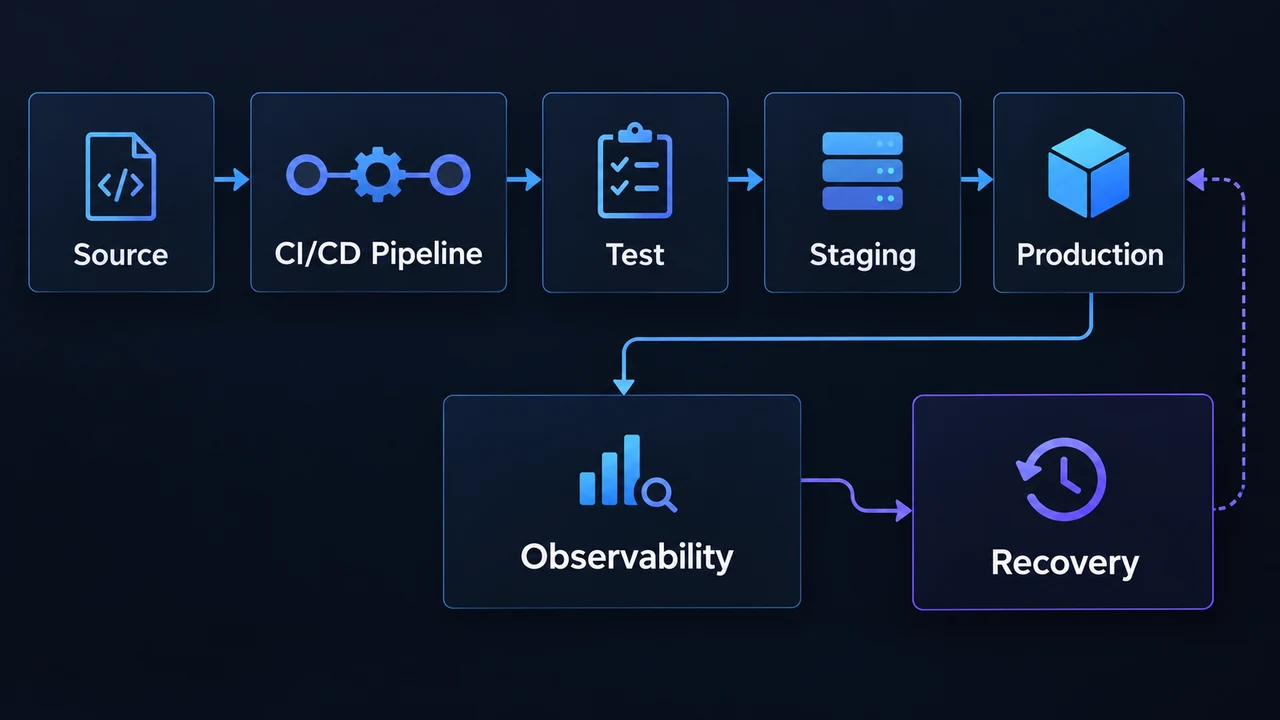
Choose the operating scope before choosing tools.
- Typical first step
- Review one release path and its production ownership.
- Inputs we need
- Repositories, environments, cloud access, deployment flow, incidents and security constraints.
- Outputs
- Target delivery design, automated controls, runbooks and ownership map.
- Working format
- Project delivery, migration or focused improvement; managed operations only by separate agreement.
Project delivery, migration, CI/CD or managed operations are different purchases.
We define the boundary first so responsibilities do not disappear between engineering and operations.
Delivery foundation
Environments, infrastructure as code and release pipeline.
Ends with tested controls and handoff.Cloud migration
Target design, move sequence and cutover controls.
Provider contracts and business continuity decisions remain client-owned.Reliability enablement
Observability, backup verification and operational runbooks.
No 24/7 on-call, RTO, RPO or SLA unless explicitly contracted.Managed operations
Continuous monitoring and response responsibilities.
Available only through a separately defined service agreement.Cloud and DevOps scope with operational boundaries.
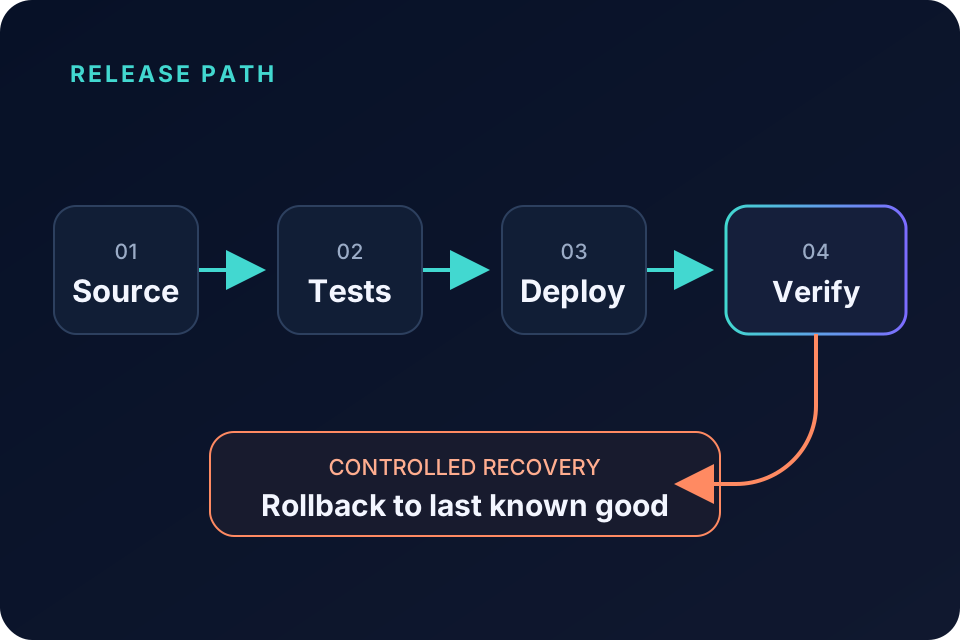
Environments
Repeatable development, test and production definitions.
Boundary: Application feature work is separate.CI/CD
Build, test, approval, deployment and rollback controls.
Boundary: Business release approval remains client-owned.Infrastructure
Versioned compute, network and data-service configuration.
Boundary: Cloud-provider contracts remain with the client.Observability
Logs, metrics, traces, dashboards and alert routes.
Boundary: Continuous response coverage is not implied.Backup and recovery
Backup policy implementation and restoration checks.
Boundary: RTO/RPO require business approval and evidence.Security controls
Access, secrets and pipeline guardrails.
Boundary: Formal certification or penetration testing is separate.Make delivery and recovery part of the commerce system.
Cloud and delivery engineering covers environments, CI/CD, observability and controlled recovery.
- Cloud environments and infrastructure boundaries.
- Quality gates and rollback-ready release paths.
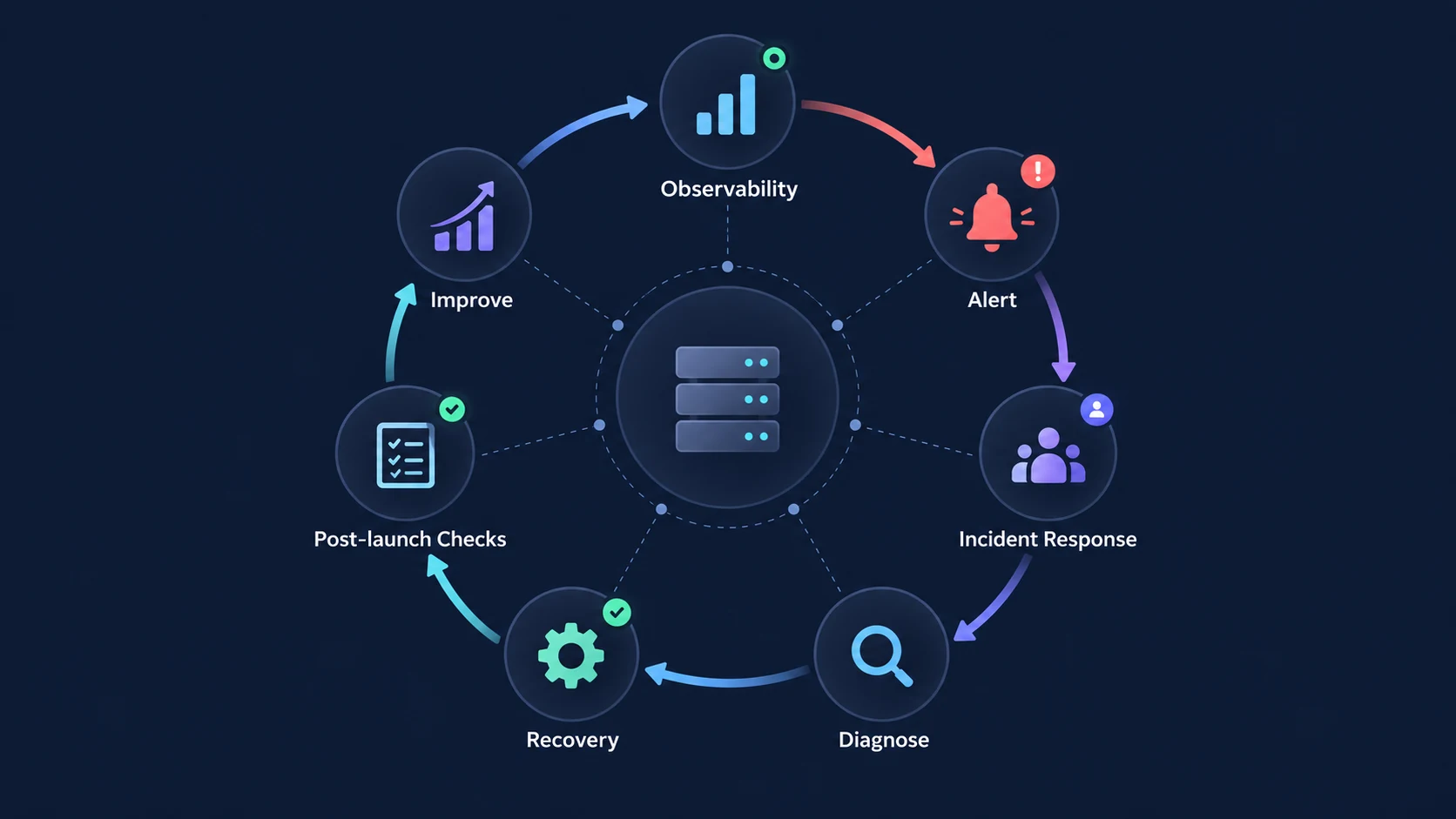
- Observability, incident evidence and recovery procedures.
Move release knowledge into versioned controls.
- Environment differences are discovered during release.
- Rollback depends on a few people.
- Alerts are noisy or have no owner.
- Backups exist but restoration is not evidenced.
- Environment definitions are reviewed with code.
- Release and rollback paths are rehearsable.
- Signals route to a named operating owner.
- Recovery checks expose gaps before an incident.
Assess → Design → Automate → Handoff
Assess
Environments, pipeline, incidents and ownership.
Trace delivery and recovery paths.
Gap and risk register.
Design
Constraints, security needs and operating model.
Define target controls and responsibility boundaries.
Architecture and implementation backlog.
Automate
Access, repositories and approved design.
Build infrastructure, pipeline and observability controls.
Tested delivery increments.
Handoff
Operational checks and named owners.
Exercise release, rollback and recovery procedures.
Runbooks, knowledge transfer and open risks.
Outputs
Included
- 01Environment and cloud architecture
- 02Infrastructure-as-code repositories
- 03CI/CD pipeline definition
- 04Observability and alert map
- 05Recovery checklist and test record
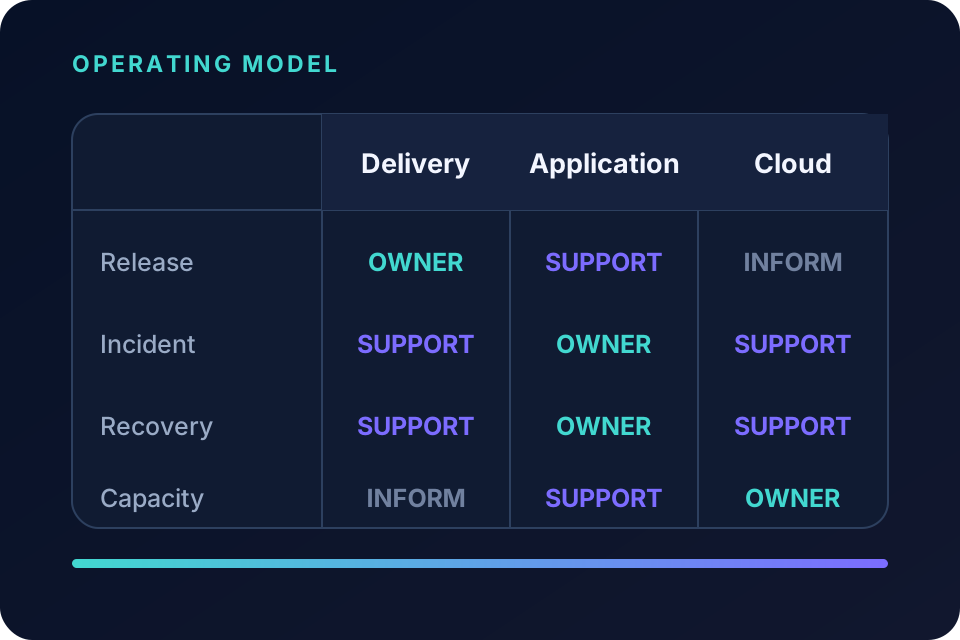
- 06Operational responsibility matrix
Team shape
A cloud or DevOps engineer, architect, and security and operations owners; the mix follows the environments, CI/CD and recovery scope.
Code and IP
The client owns the project-specific code and agreed deliverables after payment; third-party licenses and pre-existing tools keep their original terms.
Handoff and support
Handoff includes agreed repositories, documentation and knowledge transfer. Ongoing support is a separate scope unless included in the engagement.
Not included by default
Cloud fees, permanent on-call, managed infrastructure and contractual RTO/RPO/SLA are not included unless separately agreed. Provider contracts and penetration testing remain separate.
Price factors
Environment count, current automation, provider and network complexity, data migration, security controls, recovery requirements and ownership model.
Example operational responsibility matrix.
Illustrative structure only — not a client case or a performance claim.
01Release failedEngineering · pipeline logs · rollback decision
02Service degradedOperating owner · dashboard · escalation path
03Backup invalidPlatform owner · restore test · remediation
04Provider incidentClient owner · provider channel · continuity decision
What affects eCommerce DevOps and cloud delivery cost?
Environment count is only the visible part. Recovery objectives, access controls and operating ownership must be defined before a reliable estimate.
| Factor | Effect on scope | Evidence needed |
|---|---|---|
| Current delivery path | Manual releases, inconsistent environments and missing tests require different remediation sequences. | Pipeline definition, repositories, environments and recent release failures. |
| Cloud and network topology | Accounts, regions, private networks, data services and vendor dependencies shape infrastructure work. | Provider inventory, diagrams, access model and contractual constraints. |
| Security controls | Secrets, privileged access, approvals and audit requirements add implementation and review gates. | Role model, data sensitivity, policies and required evidence. |
| Recovery requirements | <abbr title="Recovery Time Objective">RTO</abbr>, <abbr title="Recovery Point Objective">RPO</abbr>, backups and rollback need business-approved targets and tests. | Approved objectives, backup inventory, restoration history and continuity owner. |
| Operating model | Project handoff and managed operations require materially different staffing and responsibility. | Named responders, coverage hours, escalation route and support agreement. |
Start with one release path and its owners.
Do you require a specific cloud provider?
No. The approach follows the current provider, constraints and team capability.
Is ongoing management included?
Not by default. Project delivery ends with agreed controls and handoff; managed operations require a separate agreement.
Do you provide an SLA or 24/7 on-call?
Only if explicitly contracted with defined coverage, responsibilities and evidence.
Can you improve an existing CI/CD setup?
Yes. The pipeline can be hardened incrementally without replacing every tool.
Start with one release path and its owners.
After contact we review environments, repositories, incidents and responsibility boundaries, then define the next step.
Review your release path →