eCommerce Platform Selection and Engineering
Select, implement and evolve an eCommerce platform for B2C, B2B or marketplace operations. We decide whether to retain, extend, upgrade or replace before committing to custom work.
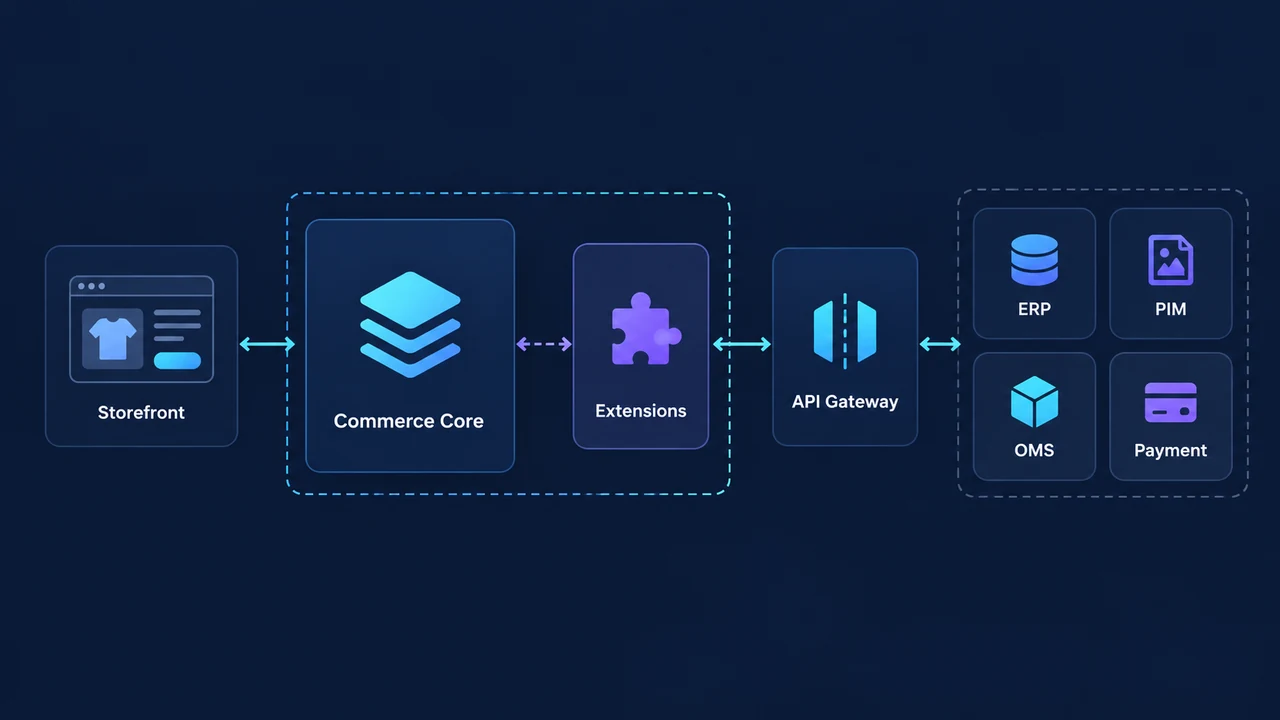
A platform engagement starts with fit, not a vendor preference.
- Typical first step
- Review the operating model and the highest-risk commerce journeys.
- Inputs we need
- Business rules, catalogue, channels, integrations, constraints and current platform evidence.
- Outputs
- Decision record, capability map and a scoped implementation or migration backlog.
- Working format
- Joint working sessions with business and technical owners.
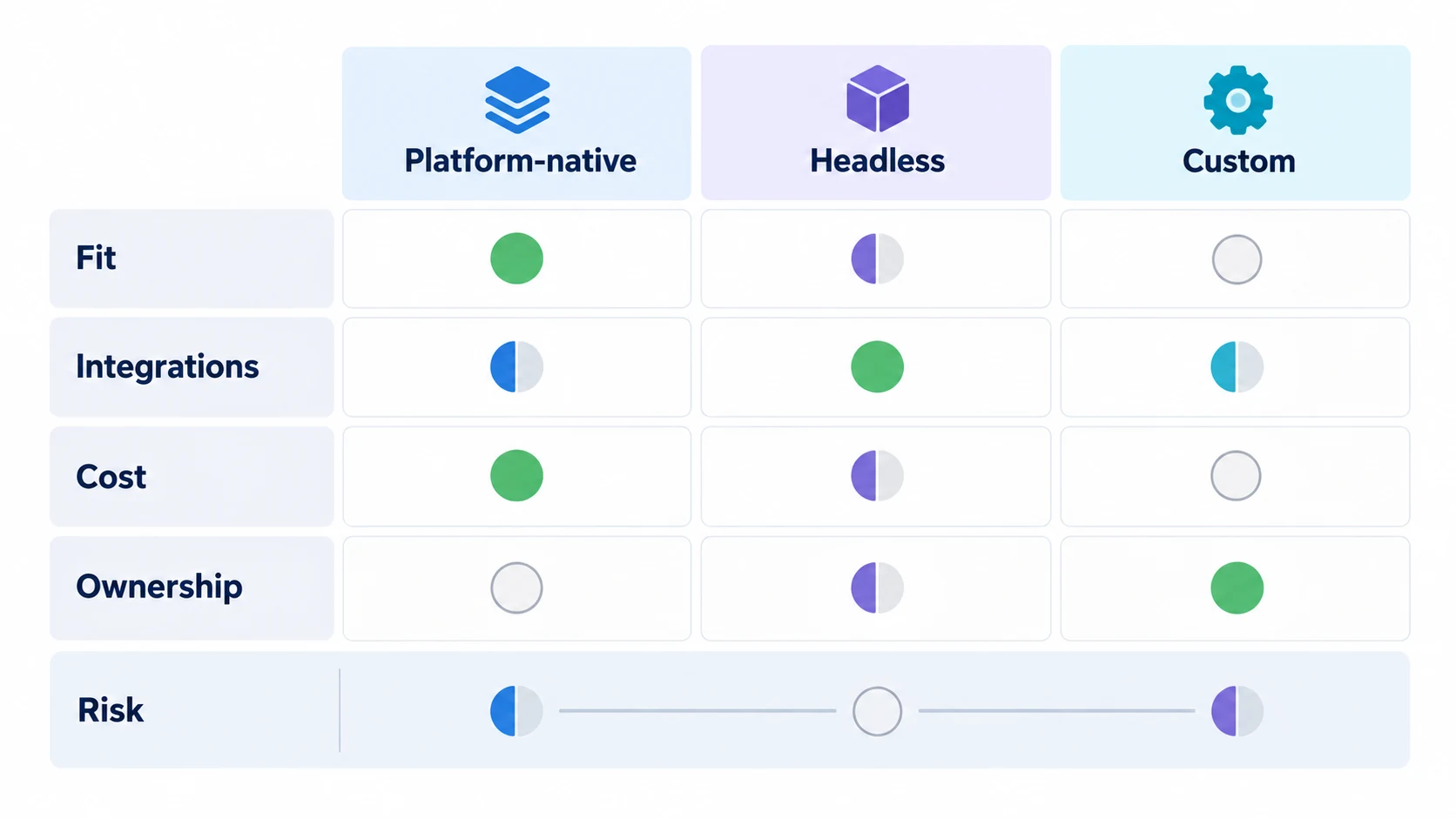
Magento, Shopify, PrestaShop, Drupal Commerce, BigCommerce or WooCommerce?
The matrix is a discovery aid, not a ranking. Product editions, extensions and operating constraints must be verified during selection.
Magento / Adobe Commerce
Complex catalogues, B2B rules and deep extension needs.
Poor fit when a small team needs low operational overhead.Shopify
Fast managed commerce with a strong app ecosystem.
Poor fit when core workflows require extensive platform workarounds.PrestaShop
Merchant-controlled catalogue and storefront for focused stores.
Poor fit when enterprise governance or complex orchestration dominates.Drupal Commerce
Content-led commerce with Drupal-native modelling.
Poor fit without Drupal capability or when SaaS simplicity is the priority.BigCommerce
Hosted commerce with API-led storefront options.
Poor fit when required workflows sit outside supported extension boundaries.WooCommerce
Content-led stores with WordPress ownership.
Poor fit for heavy operational complexity without a disciplined extension model.Move from platform workarounds to explicit commerce boundaries.
- Promotions and pricing depend on brittle plug-ins.
- Catalogue changes require manual coordination.
- Checkout customisation increases upgrade risk.
- Replatforming is discussed without migration evidence.
- Native capabilities are used where they fit.
- Extensions have clear owners and upgrade boundaries.
- Platform gaps are isolated behind stable contracts.
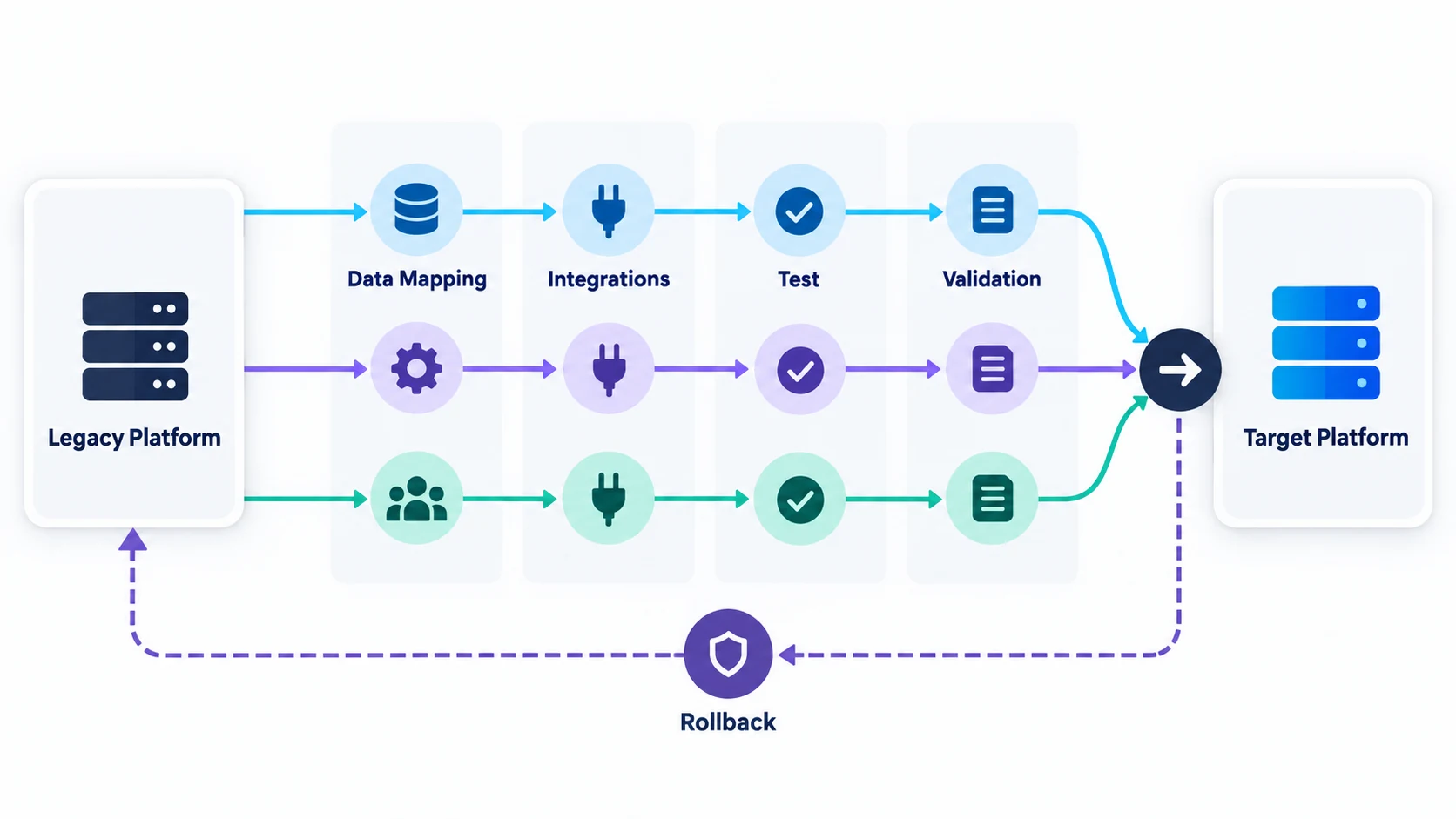
- Migration is phased around data, journeys and cutover risk.
Six areas we can own — with the boundary visible.
Platform selection
A criteria-led recommendation.
Boundary: Vendor procurement and licensing remain with the client.Storefront and checkout
Defined journeys and implementation scope.
Boundary: Brand strategy and content production are separate.Catalogue and pricing
Rules, models and extension boundaries.
Boundary: Day-to-day merchandising remains a client operation.Integrations
Contracts for ERP, PIM, OMS and payments.
Boundary: Replacement of source systems is excluded unless scoped.Migration and cutover
Data mapping, rehearsal and rollback approach.
Boundary: Source-data cleansing needs an explicit workstream.Platform evolution
Upgrade, extension and technical-debt roadmap.
Boundary: Managed operations are not implied.Choose the platform boundary before building.
This service owns platform fit, implementation and extension—not a generic new-store build or migration programme.
- Platform implementation for catalogue, pricing, checkout and operating workflows.
- Fit assessment: retain, extend, upgrade or replace the current platform.
- Magento, Adobe Commerce, Shopify, BigCommerce, WooCommerce and headless stacks.
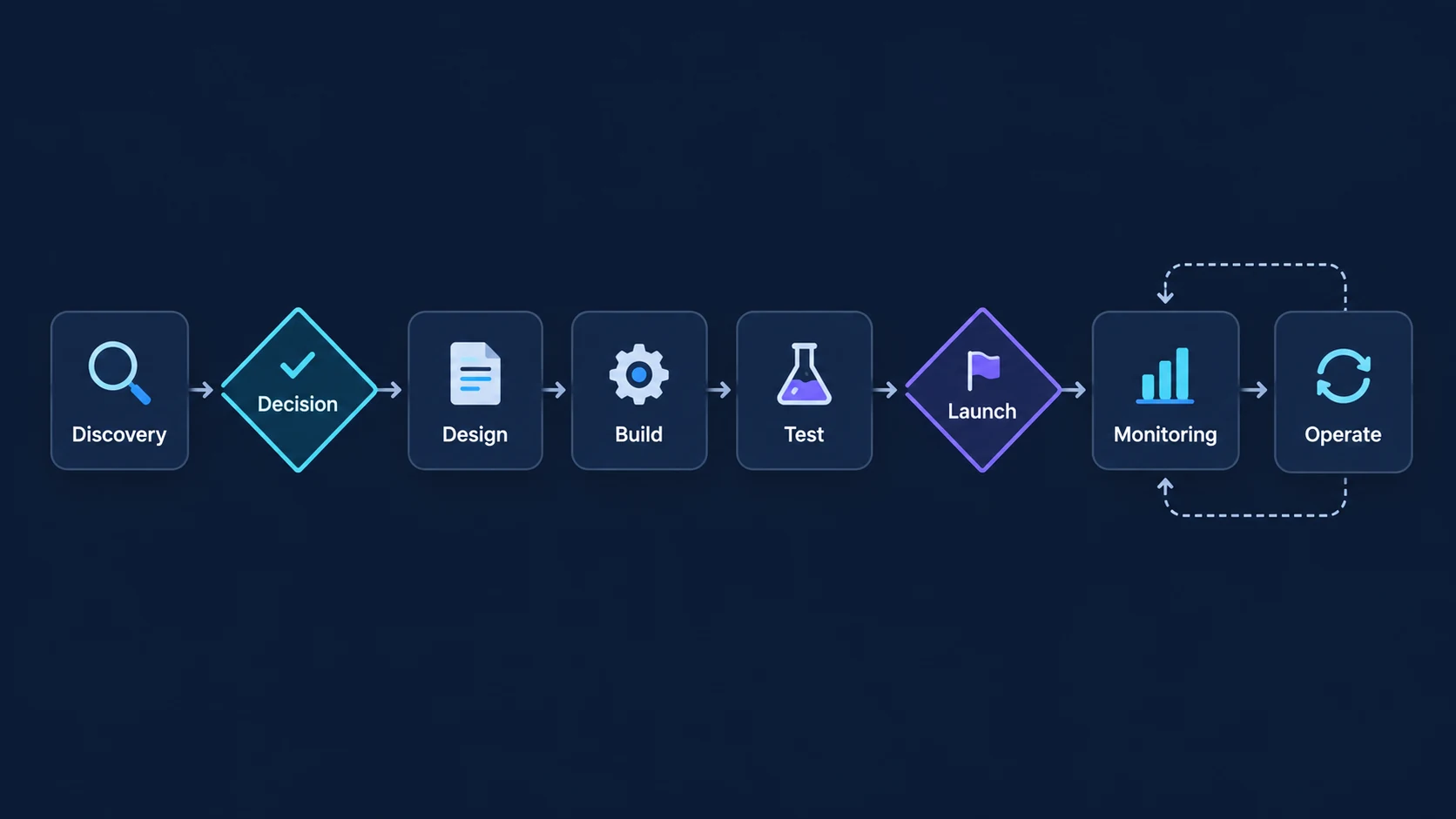
Discover → Select → Implement → Evolve
Discover
Business rules, journeys and platform evidence.
Map capabilities, constraints and ownership.
Decision criteria and risk map.
Select
Criteria, vendor facts and integration needs.
Compare realistic platform and migration paths.
Documented recommendation and boundary.
Implement
Approved scope, environments and source access.
Build, integrate and test vertical journeys.
Working increments and release evidence.
Evolve
Production data and agreed priorities.
Review behaviour, upgrades and backlog trade-offs.
Sequenced improvement roadmap.
Outputs
Included
- 01Platform fit matrix
- 02Capability and extension map
- 03Migration and cutover plan
- 04Integration contracts
- 05Regression and release checklist
Team shape
A platform architect, commerce engineers, quality specialist and delivery lead; the mix follows platform choice, migration and integration scope.
Code and IP
The client owns the project-specific code and agreed deliverables after payment; third-party licenses and pre-existing tools keep their original terms.
Handoff and support
Handoff includes agreed repositories, documentation and knowledge transfer. Ongoing support is a separate scope unless included in the engagement.
Not included by default
Licenses, vendor procurement, catalogue content entry, ongoing merchandising and 24/7 operations unless explicitly scoped.
Price factors
Platform choice, catalogue and pricing complexity, migration volume and quality, integration count, storefront variation and release constraints.
What a platform decision record can look like.
Illustrative structure only — not a client case or a performance claim.
01CapabilityNative, extension or external service
02ConstraintData, workflow, compliance or ownership
03DecisionChosen boundary and rejected alternatives
04MigrationSequence, dependency and rollback condition
What affects eCommerce platform development cost and timeline?
The estimate follows the operating model and migration evidence, not a generic platform package. A platform name alone is not enough to price or schedule the work.
| Factor | Effect on scope | Evidence needed |
|---|---|---|
| Platform path | Retaining, extending, upgrading or replacing the platform require different discovery and investment decisions. | Current edition, extension inventory, upgrade constraints and ownership model. |
| Catalogue and pricing | Variants, bundles, contract prices, promotions and multi-store rules increase modelling and regression depth. | Representative products, price rules, customer groups and exception cases. |
| Migration | Products, customers, orders, content and URLs may need mapping, rehearsal, reconciliation and rollback. | Source exports, data quality sample, URL inventory and retention rules. |
| Storefront and checkout | Multiple brands, markets, currencies, payment paths and accessibility states expand design and test coverage. | Approved journeys, content readiness, device priorities and payment constraints. |
| Integrations and launch | ERP, PIM, OMS, tax, search and fulfilment dependencies shape sequencing and cutover risk. | API documentation, test environments, owners, peak periods and launch window. |
Start with the platform context and the hardest journey.
Do you always recommend replatforming?
No. We first test whether targeted changes can remove the limiting constraints with less risk.
Can you work on an existing platform?
Yes. The engagement can focus on upgrades, extensions, checkout, integrations or a staged migration.
Will you choose a vendor for us?
We can provide a criteria-led recommendation; commercial contracting and licensing stay with the client.
What happens after the first contact?
We review the operating model, current platform and the decision that is blocked, then propose the smallest useful discovery or delivery scope.
Start with the platform context and the hardest journey.
After contact we review business rules, platform constraints and available data, then propose the smallest useful next step.
Discuss your platform →