eCommerce API Development Services
Design and deliver versioned commerce APIs with explicit ownership, access, errors, idempotency, compatibility and operational controls.
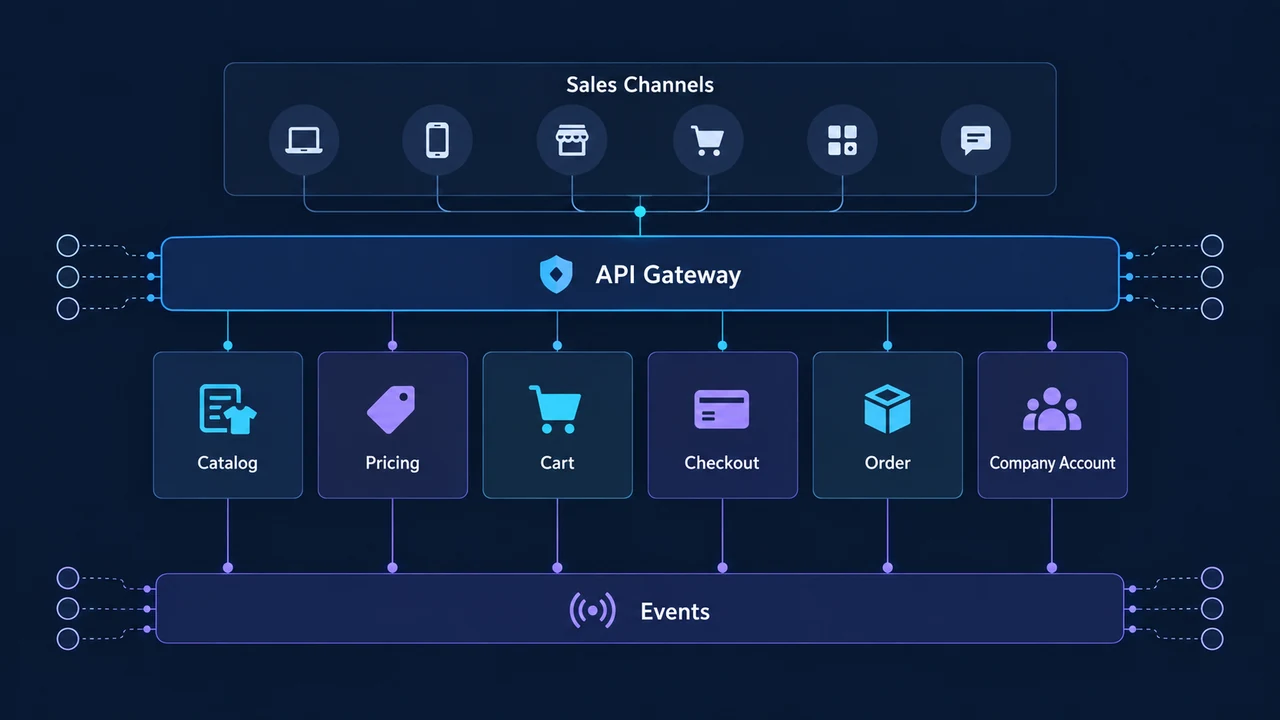
A focused engagement for an owned commerce API boundary.
- Best for
- Catalogue, pricing, account, cart and order APIs used by several consumers.
- Typical first step
- Contract and consumer discovery, including change, access and failure constraints.
- Inputs
- Consumer journeys, existing payloads, source systems, security rules and representative traffic.
- Outputs
- Contract decisions, delivery slices, compatibility plan and operational controls.
- Working model
- Joint work with named API, source-system and consumer owners.
Replace hidden operational risk with an owned capability.
- Manual approvals and spreadsheet rules
- Business logic spread across plug-ins and services
- Channels coupled directly to legacy systems
- Changes require risky all-at-once releases
- Explicit workflows with accountable owners
- Rules located in a maintainable capability
- Stable contracts protect channels and systems
- Capabilities delivered and verified in stages
Choose the API boundary before choosing the transport.
REST, GraphQL, events and batch exchange solve different access and consistency needs. The contract must first name the capability owner, consumers and failure behaviour.
Synchronous API
Use for bounded requests that need an immediate answer and a defined timeout.
Boundary: errors, retries, rate limits and idempotency are part of the contract.Events
Use to publish state changes to independent consumers without coupling their release paths.
Boundary: delivery semantics, ordering, replay and schema evolution are explicit.Orchestration
Use when one business action coordinates several systems and requires compensating or reconciliation paths.
Boundary: the orchestrator owns workflow state, not every source record.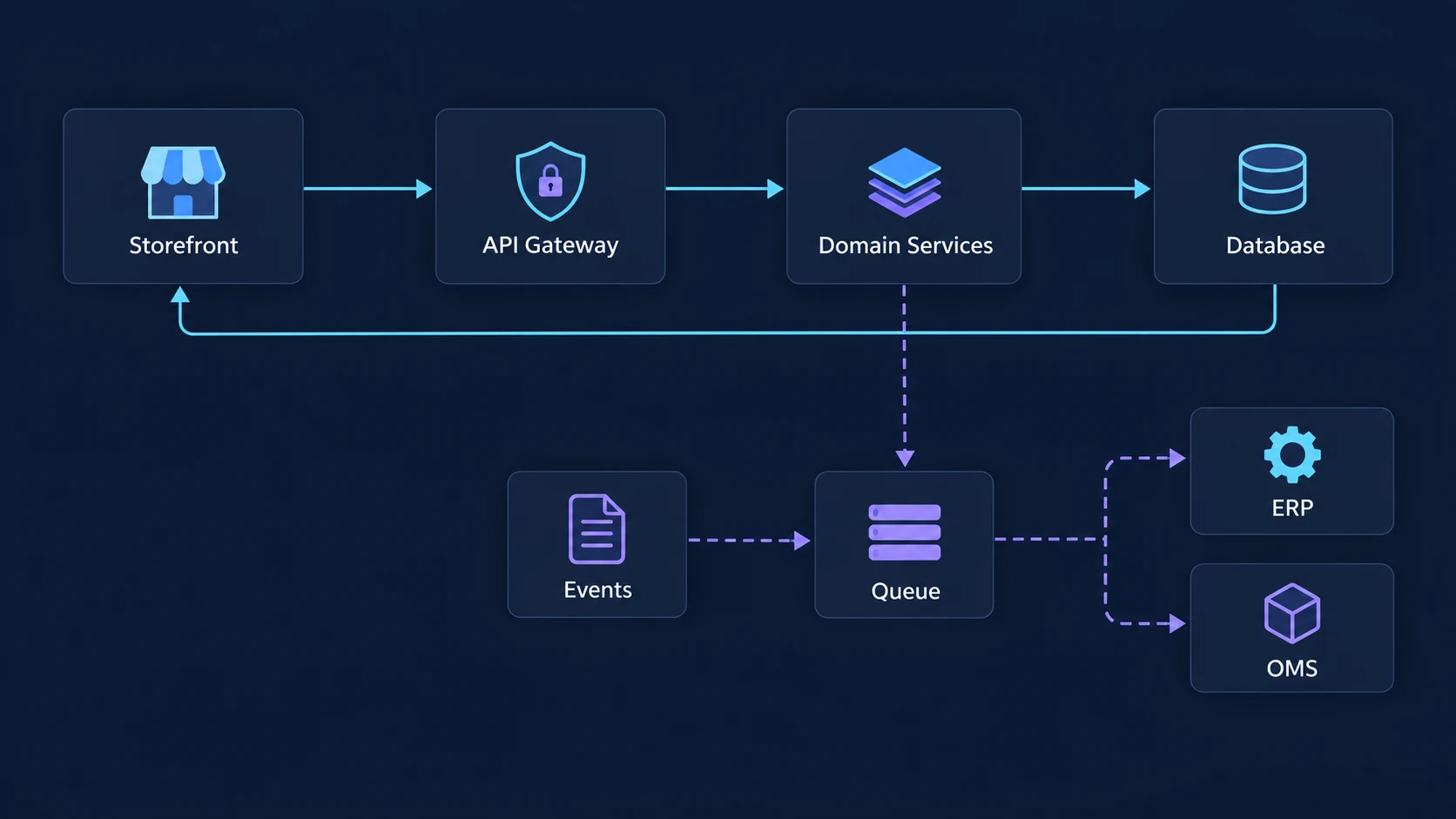
Six responsibilities inside eCommerce API delivery.
Contract and domain design
Commands, queries, resources, events, identifiers and ownership are explicit.
Boundary: Does not invent business policy without a named decision owner.
Security and access
Authentication, authorization, scopes, secrets and audit needs are modelled.
Boundary: Formal certification is separate unless explicitly scoped.
Compatibility and versioning
Consumers, deprecation, schema evolution and migration windows are planned.
Boundary: Consumers remain responsible for their approved migrations.
Reliability semantics
Timeouts, retries, idempotency, ordering and failure responses are testable.
Boundary: Source-system availability remains an explicit dependency.
Observability and support
Traces, metrics, logs, alerts and correlation identifiers support diagnosis.
Boundary: 24/7 support requires a separate agreement.
Consumer rollout
Contract tests, sandboxes, documentation and staged adoption reduce release risk.
Boundary: Each consumer implementation is scoped separately.
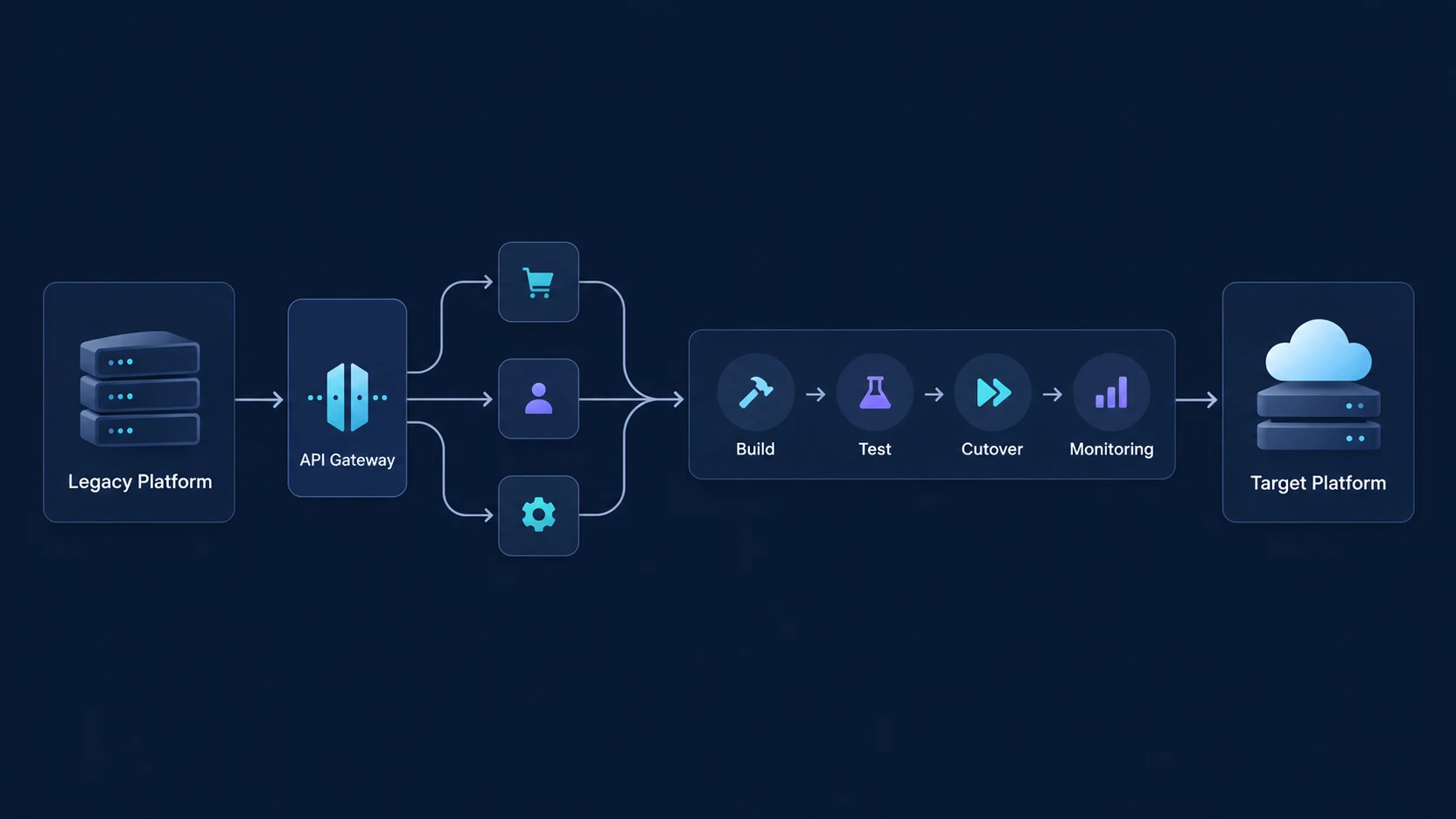
Give every API contract an owner and a change policy.
This page owns API design and delivery intent; custom platforms, B2B portals and marketplaces have separate commercial owners.
- Versioned catalogue, pricing, account, cart and order contracts.
- Authentication, authorization, errors, idempotency and compatibility.
- Orchestration, events, observability and consumer migration.
Four stages, each ending in a reviewable output.
Discover
Shape
Build
Evolve
Know what is produced, who participates and where ownership sits.
Core artifacts
- 01Capability and domain map
- 02Architecture decision records
- 03API or event contracts
- 04Prioritised delivery backlog
- 05Source code and automated checks for built scope
- 06Operational notes, handoff record and next-step plan
Working team
The exact team follows the scope. It can combine architecture, backend, frontend, quality and delivery roles; the proposal should name the roles required for the selected capability.
Ownership and IP
The client owns the project-specific source code and agreed project artifacts delivered for the engagement, subject to the signed contract and any identified third-party or pre-existing components.
Handoff and support
Handoff covers repositories, agreed documentation, known risks and an ownership walkthrough. Continued delivery or support is a separate agreed scope, not an automatic dependency.
Not included by default
- Third-party licences and vendor fees
- Legal, tax, payment or regulatory certification
- Complete source-data cleansing
- 24/7 operations or support unless contracted
- Unrelated replacement of surrounding systems
What affects price
- Number and complexity of workflows
- Systems and contracts involved
- Data quality and migration needs
- Security, compliance and access constraints
- Channels, environments and release requirements
- Required team shape and ownership model
A sample decision package — not a client claim.
No verified public case is assigned to this service. Until evidence is approved, the page shows the structure of a useful result rather than invented outcomes.
Business constraint, options, assumptions and decision owner
Responsibilities, data ownership and dependencies
Commands, events, errors, versioning and access rules
Acceptance evidence, rollout, observability and handoff
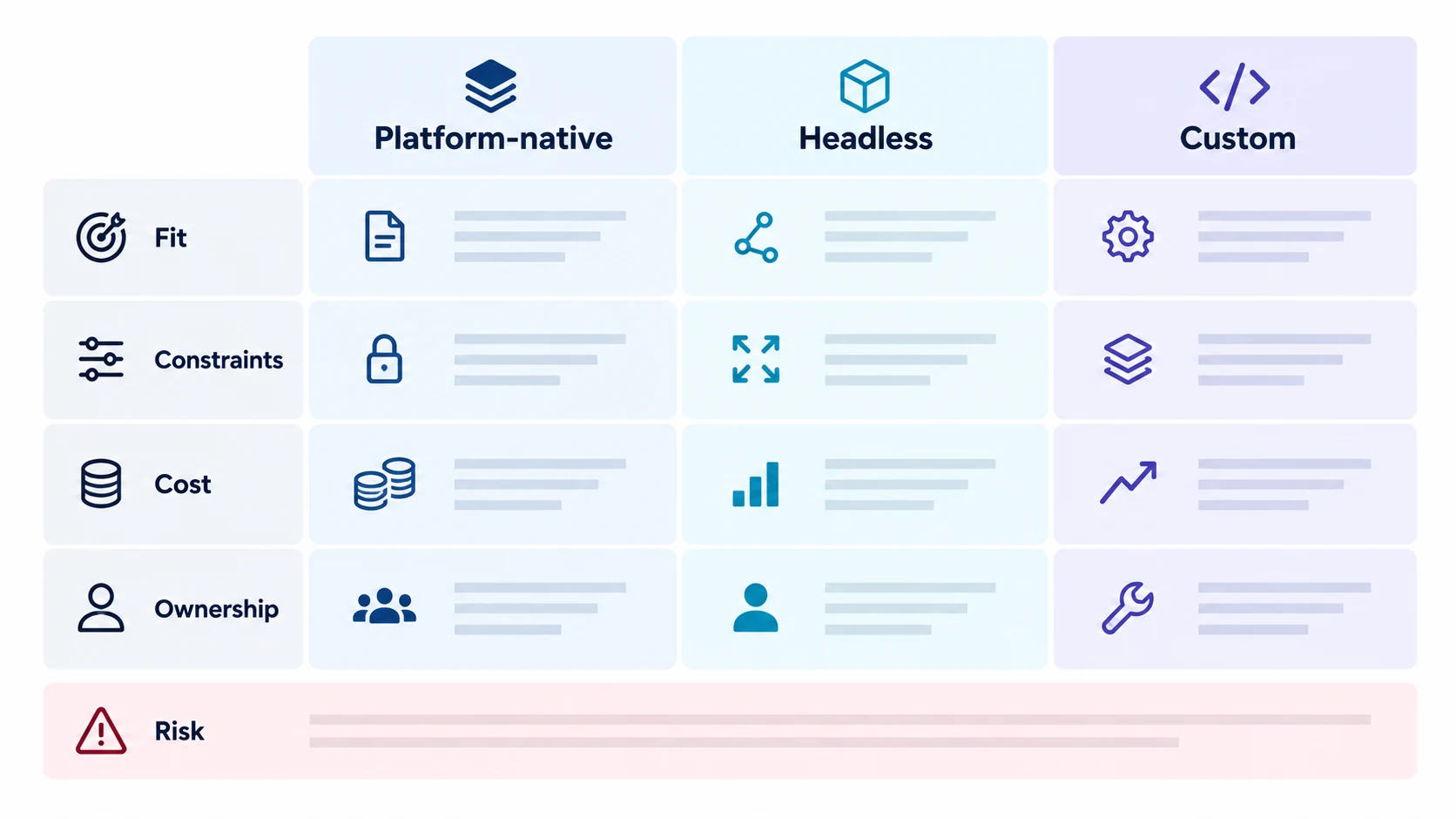
What affects custom eCommerce development cost and timeline?
Custom scope is shaped by capabilities and ownership, not screen count. The build decision should survive a documented platform, extension and hybrid comparison.
| Factor | Effect on scope | Evidence needed |
|---|---|---|
| Capability depth | B2B approvals, contract pricing, marketplace settlement and configurators contain different states and exception paths. | Rules, roles, state transitions and representative edge cases. |
| API surface | Channels, partners and internal consumers expand contracts, versioning, authorization and compatibility testing. | Consumer list, commands, queries, events, access model and change policy. |
| Legacy boundaries | Staged replacement requires coexistence, data ownership and rollback paths. | Dependency map, source-of-truth decisions and acceptable transition states. |
| Security and compliance | Sensitive data, privileged workflows and regulated payments add controls and review gates. | Data classification, roles, provider responsibilities and required assessments. |
| Team and handoff | The delivery model changes documentation, observability and knowledge-transfer depth. | Named product and technical owners, environments and post-launch ownership. |
Questions to resolve before API delivery starts.
How do we know custom development is justified?
The first step compares supported platform workflows, extensions, hybrid boundaries and custom ownership against the operating model. A custom build should survive that comparison.
Can you take over an existing custom platform?
Yes, after reviewing the codebase, architecture, delivery path, dependencies and operational risks. The review defines what can be changed safely before delivery scope is agreed.
What does Flexor need from our team?
Access to the relevant workflows, technical context, representative data, system owners and people authorised to make product and architecture decisions.
Does the engagement include design, integrations and infrastructure?
Only where they are required by the agreed capability. Storefront design, surrounding integrations and infrastructure are scoped explicitly rather than assumed.
Who owns the code and documentation?
Project-specific deliverables are handed to the client under the signed agreement. Third-party and pre-existing components are identified separately.
What happens after we contact you?
We review the workflow and constraints you share, identify missing context and propose the smallest useful next step. A delivery commitment is made only after scope and responsibilities are agreed.