
eCommerce Development: Technologies, Process, and Architecture
A practical overview of technology, delivery, integrations, and architecture for a resilient commerce platform.
eCommerce development is the design, implementation, and operation of software that supports product discovery, transactions, customer accounts, payments, and order workflows. It includes the storefront, but also the data, integrations, security, and operational tools required to fulfill what the storefront promises.
A scalable online store is not defined by one framework. It is defined by clear domain rules, reliable system boundaries, measurable performance, and maintainable ownership.
What eCommerce development includes
Typical work covers discovery, architecture, UX/UI, frontend and backend engineering, platform configuration, custom modules, integrations, migration, quality assurance, deployment, monitoring, and maintenance.
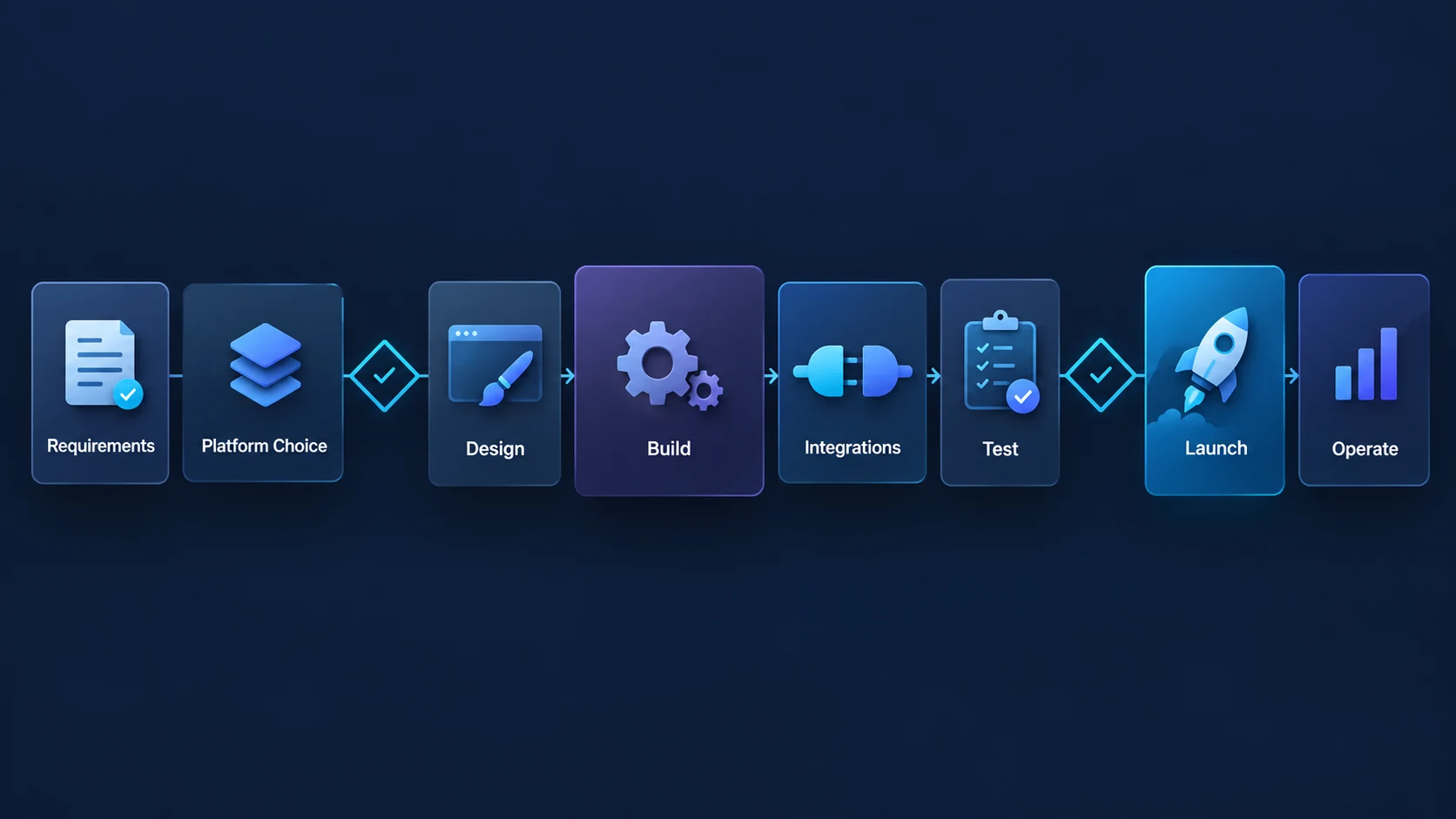
The exact mix depends on the model: direct-to-consumer, B2B, marketplace, subscription, multi-brand, or international commerce each introduces different workflows.
Core architecture components
Most commerce systems contain a storefront, catalog, search, pricing, promotions, cart, checkout, payment, customer identity, orders, and administration. ERP, PIM, CRM, OMS, warehouse, tax, and marketing systems frequently surround the core.
For every product, price, inventory record, customer, and order, define a system of record. Integration contracts should specify validation, timing, retries, idempotency, reconciliation, and monitoring.
Architecture can be monolithic, modular, composable, or service-based. Choose the simplest structure that meets real change, scale, and ownership requirements. Distributed systems are not automatically more scalable; they move complexity into networks and operations.
Platform and technology choices
Hosted products such as Shopify and BigCommerce reduce infrastructure ownership. Open-source platforms such as Magento and WooCommerce offer greater code control. Composable and custom development can support distinctive models at the cost of additional engineering responsibility.
Frontend and backend technologies—React, Vue, PHP, Java, .NET, Node.js, Python, or others—should be selected for ecosystem fit, team capability, performance profile, and maintainability. A language choice cannot compensate for an unsuitable commerce model.
Development process
- Define business outcomes and complete workflows.
- Map systems, data ownership, risks, and constraints.
- Select platform and architecture against scenarios.
- Design and prototype uncertain customer journeys.
- Implement complete vertical slices.
- Migrate representative data early.
- Test transactions, exceptions, security, accessibility, and load.
- Launch with monitoring, rollback, and support.
- Improve from analytics, research, and operational evidence.
Discovery should produce decisions rather than a large document nobody uses. Architecture should be recorded with assumptions and tradeoffs. Design and engineering should work together on states, content, accessibility, and performance.
What makes an online store successful?
Customers need relevant discovery, accurate product information, transparent price and delivery, dependable checkout, and clear post-purchase communication. Operators need manageable content, visible errors, reliable integrations, and controlled releases.
Technical quality supports both groups. Set performance budgets, minimize third-party scripts, secure accounts and administration, automate critical tests, and monitor transaction failures. Preserve SEO during migration through redirects, canonicals, structured data, and analytics continuity.
Common development mistakes
- selecting a platform before documenting workflows;
- copying competitors instead of researching customers;
- leaving data cleanup and integration details until late;
- adding extensions without assessing overlap and performance;
- testing only successful checkout;
- treating launch as the end of ownership;
- promising scalability without workloads or operational plans.
Security, accessibility, and measurement
Protect customer accounts, administration, APIs, and integrations with least privilege, secure credentials, monitoring, and timely updates. Accessibility requirements—keyboard navigation, labels, focus, contrast, status announcements, and error recovery—belong throughout design and testing.
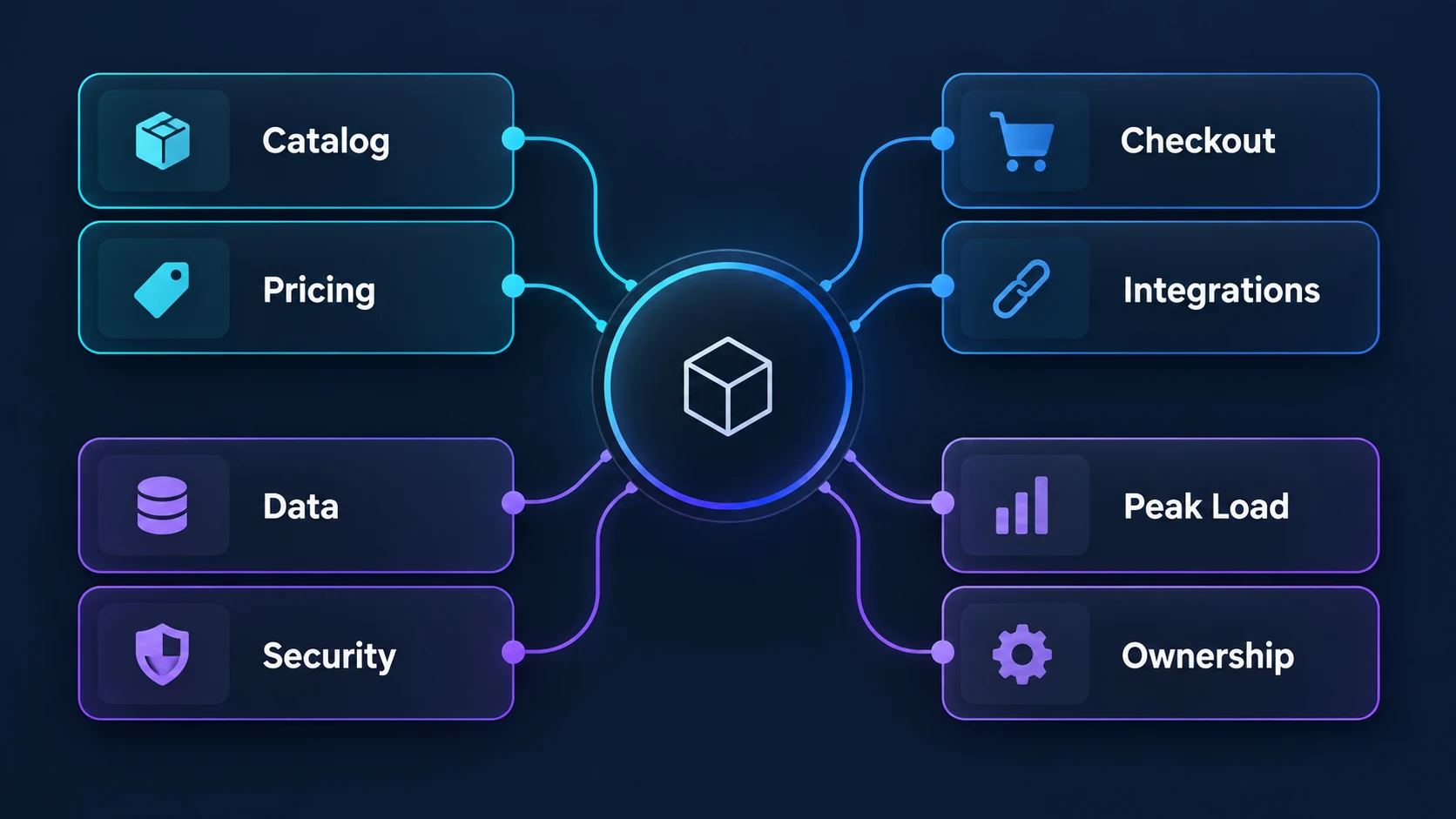
After launch, monitor checkout completion, payment errors, search success, Core Web Vitals, integration queues, order exceptions, refunds, support demand, and customer feedback. Pair commercial metrics with reliability so revenue does not hide growing operational cost.
Choosing a development approach
Use a platform when its native model fits and reduces ownership. Add custom services where they support essential differentiation. Consider a composable architecture when components need independent change and the organization can operate the integration layer.
Ask an eCommerce development company to explain alternatives, assumptions, risks, total cost, and post-launch ownership. Good recommendations are specific and falsifiable.
Flexor provides end-to-end eCommerce development services, from discovery and UX to integrations and ongoing engineering. Explore Flexor’s complex-commerce focus and learn about the company.
Frequently asked questions
How long does eCommerce development take?
A standard implementation may take weeks; complex custom or integration-heavy systems often take months. Scope, data, decisions, content, and external dependencies drive timing.
What is scalable eCommerce architecture?
It is architecture that can meet expected traffic, catalog, order, regional, and organizational growth with controlled cost and reliable operations. The definition requires measurable workloads.
Is custom development necessary?
Only for requirements that established products cannot satisfy cleanly or economically. Reuse mature services for commodity capabilities.
What happens after launch?
Teams monitor transactions and performance, fix defects, apply security updates, maintain integrations, analyze behavior, and prioritize product improvements.
How should an eCommerce project begin?
Begin with business outcomes, complete workflows, data ownership, constraints, and measurable acceptance criteria. Platform selection should follow this discovery, not precede it.
Which integrations should be tested first?
Test the integrations that can block revenue or fulfillment first: price and inventory feeds, payment authorization, order export, shipment status, and refunds.